Most businesses believe they understand their customers.
They’ve built personas. They’ve run surveys. They’ve looked at the data.
And on the surface, it feels like enough. But knowing your customer isn’t just about what they say, or how they look on paper. It’s about understanding what actually shapes their decisions, the small moments of hesitation, the points where they pause, and the hidden factors that influence whether they move forward or not. This isn’t always easy to see. So instead of adding more theory, here’s a simple way to sense-check your understanding.
A Quick Self-Check
1. Do you know what’s stopping your customers?
Customers don’t always drop off for obvious reasons. It’s rarely a single big issue. More often, it’s small things: a bit of confusion, too much effort, a moment of uncertainty that build up and lead to hesitation. And when that happens, people don’t always tell you why. They just leave.
A few things to consider:
- Where do your customers hesitate or drop off in the journey?
- What parts of your experience feel unclear or effortful?
- Do you know why they leave, or just where they leave?
If you’re only tracking outcomes, you might be missing the reasons behind them.
2. Does your business see the same customer?
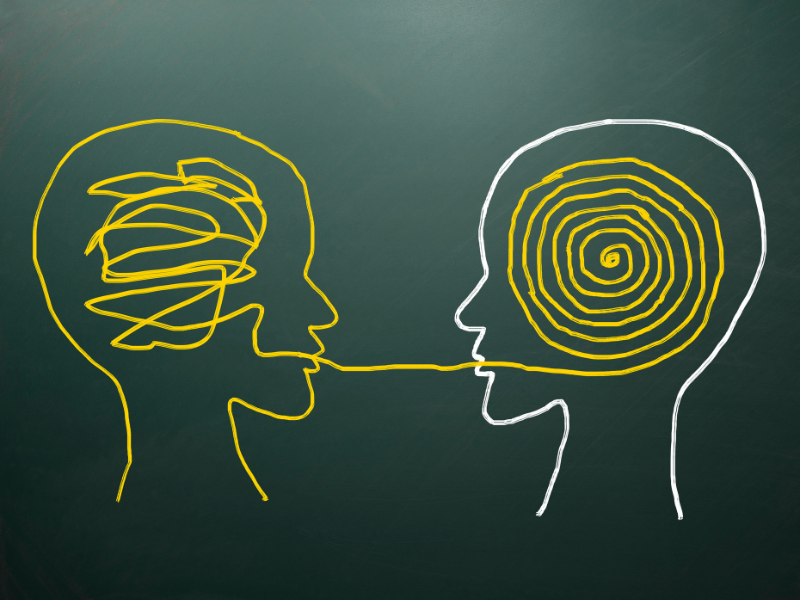
One of the biggest gaps in understanding isn’t external, it’s internal. Different teams often have different views of the same customer. Marketing might focus on motivations, product might focus on functionality, sales might focus on objections. Individually, these perspectives make sense. But when they don’t connect, the overall picture becomes inconsistent. And that shows up in the experience you create.
It’s worth asking:
- Would your marketing, product, and sales teams describe the same customer?
- Are decisions based on shared insight, or individual assumptions?
- How often do internal views on the customer differ or conflict?
When alignment is missing internally, it becomes harder to create something that feels clear and consistent externally.
3. Do you understand what’s driving your customers?
Customers don’t make decisions randomly. Behind every action whether it’s choosing you, delaying, or walking away there’s a reason. Sometimes it’s practical. Often, it’s emotional. And in many cases, it’s a mix of both. The challenge is that these drivers aren’t always visible. People don’t always articulate why they choose one option over another. They may justify it after the fact, but the real reasons often sit beneath the surface.
It’s worth asking:
- Do you know why customers choose you over alternatives?
- What makes them feel confident enough to move forward?
- Are their decisions driven more by logic, emotion, or habit?
Without understanding what’s driving decisions, it becomes harder to influence them in a meaningful way or adapt when those behaviours start to shift.
So, how did you do?
If these questions felt easy to answer, you likely have a solid understanding of your customer. If you hesitated on a few, there may be some gaps worth exploring. And if some of them were difficult to answer at all, there’s a good chance that the decisions are being made on assumptions rather than real understanding.
Why this matters
Most teams already have access to data, dashboards, and regular reporting. What’s harder to see are the moments behind the numbers, the hesitation before a click, the uncertainty before a decision, the small frictions that quietly influence outcomes. Without that layer of understanding, it’s easy to optimise what’s visible while missing what’s actually shaping behaviour. Over time, that gap adds up. Decisions feel right, but results don’t always follow.
A final thought
Understanding your customer isn’t a one-time exercise. It’s something that evolves as behaviour, expectations, and contexts change. Sometimes, the biggest shift comes not from gathering more information, but from looking at what you already have in a different way. And asking better questions along the way. If some of these questions made you pause, it might be worth taking a closer look at what’s really shaping your customer decisions.
At Emotional Logic, we focus on the behavioural side of these moments, helping teams understand not just what customers do, but what drives them to act (or not).
If you're curious to explore that further, book your free discovery call today 📞